
 Horst
Systems
Horst
Systems
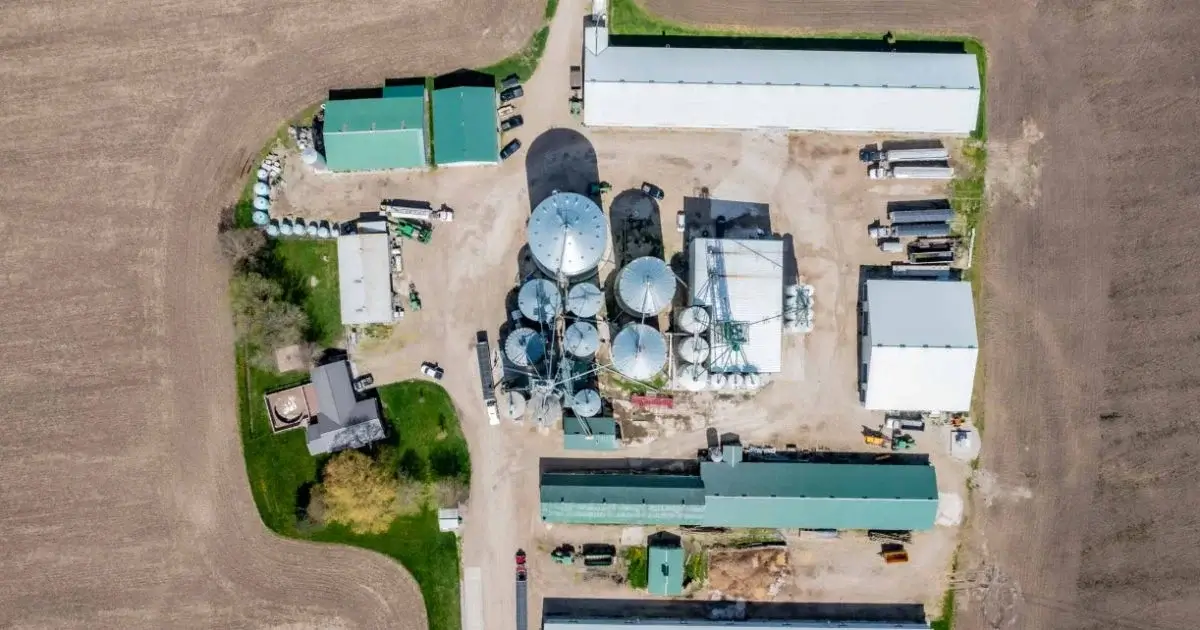
Most people who've managed grain through a wet Ontario October understand the margin between a system that runs clean and one that costs you. A poorly timed decision at the design stage shows up at harvest; trucks lined up and waiting for the pit, or wet bins that are full because the dryer can’t keep pace. The choices made before a shovel touches ground determine which harvest you're living.
The province throws enough climate variation, crop diversity, and site complexity that what works in a textbook rarely translates cleanly to a real yard. Getting grain handling system design right here means accounting for factors a spec sheet alone won't surface. Each one shapes the system in ways that are expensive to correct after the fact. The cost of a wrong decision at the design stage doesn't show up on the invoice. It shows up three harvests in, when fixing it means tearing out concrete.
Climate Dictates More Than Building Spec
Ontario's harvest window can swing from dry and efficient in late September to mud, rain, and borderline freezing temperatures by the third week of October. That variability gets baked into every decision that matters; dryer capacity, wet bin sizing, foundation depth, and the structural rating of bins and support structures.
Dryer capacity is the most direct consequence. When you're racing a wet forecast and combining every dry hour you can get, a dryer that can't keep pace with your combine turns into a harvest bottleneck fast. Sizing a tower dryer to 1,200 BPH sounds adequate on paper until a string of wet days backs up incoming grain and your wet bins hit capacity by mid-afternoon.
Operations across Perth County and Huron County have been through that scenario enough times that most serious producers spec more drying capacity than they think they'll need in an average year. Ontario doesn't give you average years often enough to plan around them.
Cold temperatures shape grain system design in Ontario in ways that compound over decades, starting with the foundation. Frost depth in Southern Ontario averages 1.2 to 1.5 metres, and that's the floor, not the target for a system you're expecting to run for 30 years. Proper foundation design accounts for frost heave, load distribution across soil types that shift from sandy loam near the lake to heavier clay further north, and long-term settlement under full bins.
Structural engineering carries a third-party stamp, but the site-specific decisions around footprint, elevation, and drainage get resolved during the design phase and can't be undone cheaply later.
Crop Mix Reshapes the Whole System
An operation running corn exclusively has different design requirements than one managing corn, soybeans, and winter wheat out of the same yard. Moisture targets, aeration requirements, safe storage temperatures, and identity-preservation needs all shift by commodity.
Trying to run soybeans and high-moisture corn through the same system without planning for it creates bottlenecks that restrict the efficiency of your operation. Aeration requirements and safe storage temperatures vary enough between crops that a bin spec'd for corn can put soybeans at risk before the grain ever moves.
The Canadian Grain Commission's safe storage guidelines by commodity are the baseline here. A well-designed system accommodates those differences from the start rather than working around them later.
If your operation is moving toward identity-preserved crops, dedicated bins, confirmed cleaning protocols between fills, and separate handling paths all become part of the design conversation. Skipping that conversation costs you the grade premium at the point of delivery. The on-farm grain storage decisions we work through together have to account for where your crop mix is headed, not just where it is today.
Site Layout Carries the Weight of Every Future Decision
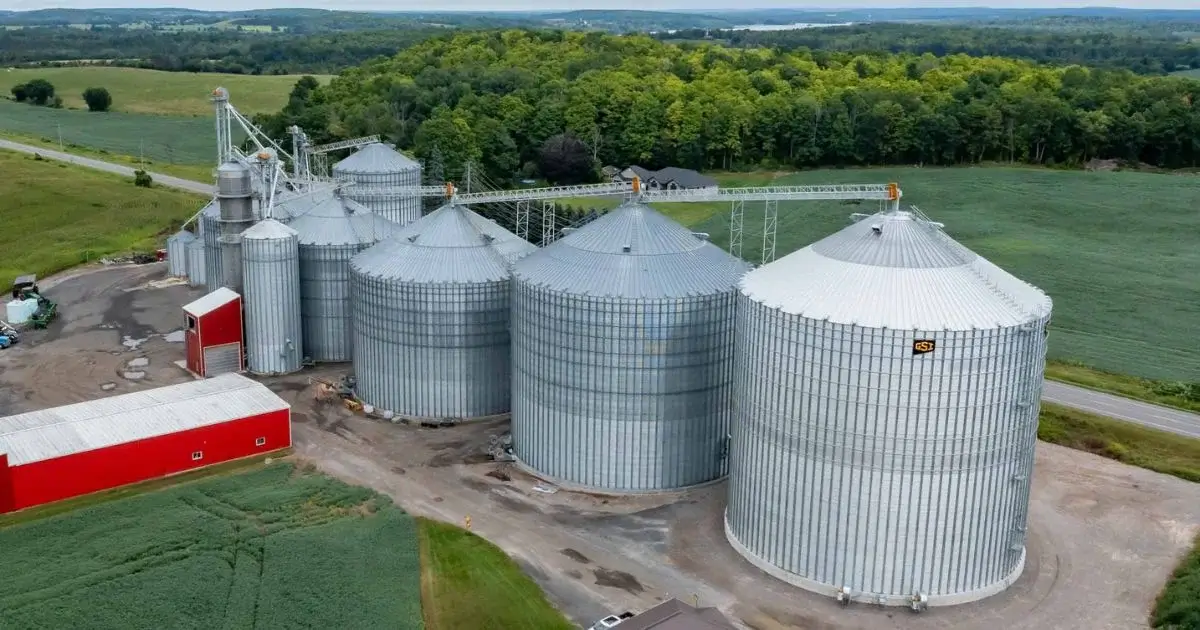
A site layout that works for today's operation but boxes in tomorrow's expansion is one of the more costly design problems we see play out across Ontario yards. The person taking over in ten years shouldn't be inheriting a site where the leg is positioned wrong and truck traffic has no clean flow path.
Fixing a site layout after concrete is poured costs multiples of getting it right during design, and that's before accounting for lost operating efficiency in the years between.
Traffic flow planning matters more as operations scale. A receiving area that works fine at lower volumes turns into a bottleneck fast at peak harvest. Trucks queuing onto the road, drivers waiting, combine sitting — those hours don't come back.
If your combining runs 600 to 800 acres a day at peak, you need trucks unloading and turning without stacking. That means the receiving pit location, truck queuing distance, the return path to the road, and where additional bins sit relative to the leg all have to work as a system. A yard that handles two trucks at a time without congestion looks completely different from one built for six.
The extra cost to build the system to properly accommodate future capacity is the premium paid today to protect operational flexibility in 2030 and beyond.
Automation Level Reflects How You Actually Run the Operation
The right level of automation in a grain system isn't the same answer for every operation. Push-button controls suit smaller systems or yards where a hands-on crew manages things directly without needing remote oversight.
PLC automated systems with touchscreen interfaces, real-time monitoring, and automated sequencing make more sense once the scale of the storage asset justifies the investment. Top Crop Manager has tracked the shift toward automated controls on Ontario grain farms over the past several seasons. The pattern holds: complexity of the system and total storage volume are the two variables that tip the decision.
What's changed in the last decade is what PLC systems give you beyond basic control. The trend data coming off a properly specified OPI Systems grain monitoring setup tells you what's happening inside the grain mass before a problem compounds. Moisture migration in February shows up as a temperature trend weeks before it becomes a spoilage event.
A monitoring system tracking that trend gives you weeks to act; a manual check gives you a snapshot of the day you happened to climb the bin. For a producer managing 150,000 bushels through a Southern Ontario winter, that lead time protects this season's bottom line in a way a weekly visual inspection can't.
Automation decisions also connect directly to labour pressure. If your crew is stretched during harvest, a system that sequences itself (filling bins, routing through the dryer, managing elevator flow) cuts the number of calls your people have to make during a 14-hour day. That matters when you're in week three of harvest and everyone is running on short sleep.
Throughput Planning Has to Run the Full Chain
The receiving pit is the narrowest point in most grain systems, and it sets the ceiling for everything else. A pit rated at 10,000 bushels per hour does nothing for you if the elevator leg above it runs at 6,000. Flow rate mismatches between components, pit, leg, dryer feed, and bin fill create the bottlenecks that show up as trucks idling and harvest hours burning.
Sound grain system planning runs the numbers through the full chain, not component by component, and that's where the gaps get caught before they're cast in concrete. Designing for average throughput rather than peak conditions is where grain storage capacity planning tends to break down.
An operation that combines 10% of its acreage in the three days before a rain event needs a system that can receive and process that volume without stalling. That means a pit, leg, and dryer sized for your worst three days of harvest, not your best week. The window doesn't care what your median harvest day looks like, and neither does a poorly sized pit when trucks are lined up past the road allowance.
The Grain Farmers of Ontario and OMAFRA's grain storage resources both document the harvest pace pressure Ontario producers face. It's particularly acute in years where the harvest window is compressed. We size every new custom grain system build against peak demand because median throughput is the wrong number to engineer around.
What the Design Work Is Really For
The grain system you build today is the one your operation runs against for the next 30 years. Decisions made during the design phase have consequences that show up long after the commissioning crew has left the yard and reversing them is expensive.
The variables that matter most — climate, crop mix, site layout, peak throughput — are all set during the design phase, before a shovel touches ground.
If you're still working through the component questions, our material handling page covers the pit, leg, and conveyor decisions in detail. For producers earlier in the process, our blog post on questions to ask before you build is a useful place to start. When you're ready to work through your specific site, reach out to the team directly.