
 Horst
Systems
Horst
Systems
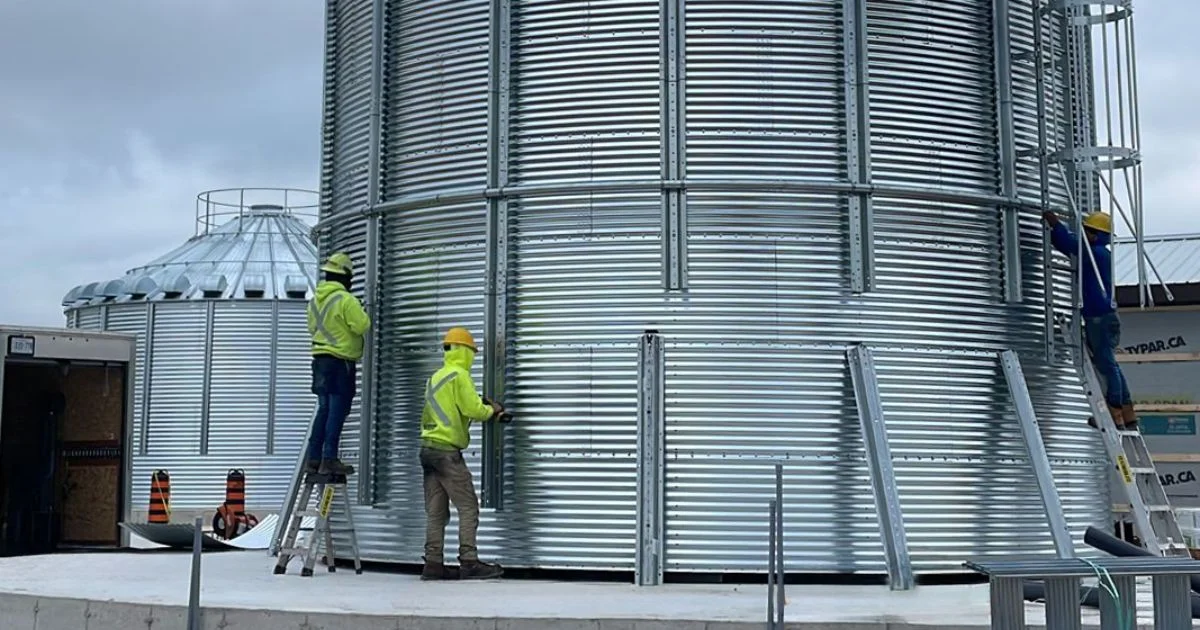
An apprenticeship is more than a paycheck; it’s a high-stakes investment in your future. At Horst, we believe your time on a jobsite should be a launchpad for a lifelong career, where every hour of hands-on work is paired with meaningful, high-level skill-building.
A skilled trade is supposed to provide a real career path. Learning from experienced people who know what they're doing. Building skills that matter. But that's not always how it works out.
At Horst Systems, pre-apprentices start out as labourers and work alongside experienced millwrights and electrical foreman from day one. We choose workers who demonstrate nerve, grit, and focus, learning a trade on real jobsites across Ontario while earning a paycheque, with crew leaders who make teaching part of regular work.
This isn't about watching from the sidelines, Pre-apprentices are part of the crew, learning the trade while contributing to actual grain system installations.
What "Horst Academy" Actually Means
We call it Horst Academy, but it's not a classroom setup. It's skilled trades training that happens on active job sites across Ontario, where we're building grain systems from concrete to commissioning.
Pre-apprentices work with crew leaders who've been doing this for years. People who can explain why something's done a certain way, not just what needs doing. These crew leaders take on teaching roles because developing the next generation matters to them—remembering what it was like starting out and knowing how much the right guidance makes a difference.
The first few months involve foundational work: setting up equipment, prepping materials, and learning how our systems go together. Pre-apprentices also watch precision work happen—millwrights aligning bucket elevators, electricians wiring PLC control systems that run grain operations.
When someone's ready, the hands-on work starts under supervision. That timeline varies by person. Some people pick things up faster. Others need more time to build confidence with certain skills. Both paths work fine as long as progress happens.
The learning isn't linear either. Comfort with one aspect of the work might come quickly, while another part takes longer to click. That's normal. The crew leaders have seen it before and know how to adjust approaches based on how someone's developing.
The Path from General Labourer to Skilled Tradesperson
Most pre-apprentices start as general labourers. Supporting the crew, moving materials, prepping jobsites, and learning how grain systems work from the ground up. It's the foundation period.
When someone's showing up consistently, working safely, and is serious about learning a trade, the move into pre-apprentice training happens. That's when attention turns to either millwrighting or electrical work, depending on interests and what the crew needs.
Pre-apprentices work directly with journeypersons on real installations, helping build steel frameworks that support grain bins, running conduit for electrical systems, and installing material-handling equipment that must work properly during harvest season.
The work matters to the project. It's not make-work or practice tasks that get redone later. When something's installed, it stays installed. When something's wired, it needs to function correctly. That's part of why the learning is effective: seeing the direct consequences of doing things right or wrong.
When someone's ready, the next step is entering a formal apprenticeship program. In Ontario, millwright apprenticeships go through Industrial Mechanic (Millwright) certification. Electrician apprenticeships go through Industrial Electrician certification.
We support that transition. Work continues, earnings continue, and now hours count toward certification. The apprenticeship structure has specific requirements for classroom time and on-the-job hours. We work with those requirements, so completion happens while staying employed.
What Makes the Horst Academy Approach Different
Teaching is built into project planning. When we bid on a job, training time gets accounted for. Learning happens as part of regular work, not when someone has spare time. It's factored into timelines and crew assignments from the start.
Mistakes are part of learning. Crew leaders expect that. The preference is for questions and getting it right the second time rather than guessing and creating problems down the line. Either way, the focus stays on understanding what went wrong and how to prevent it next time.
Development matters to the crew. Our senior millwrights and electricians take their teaching role seriously. A crew leader's success includes developing pre-apprentices—investing in seeing people succeed, not competing with them.
Teaching pre-apprentices is part of what crew leaders do, with time built into schedules for it. It's one of the core responsibilities.
The Work Pre-Apprentices Actually Do
Millwright pre-apprentices help install and align the mechanical systems that move grain through facilities. That includes bucket elevators, conveyors, augers, and receiving pits. Learning millwrighting with us means reading technical drawings, working with measurement tools, and understanding how tolerances affect equipment performance.
Early on, the work involves assisting with levels, marking measurements, passing tools, and watching installation sequences. As skills develop, the work shifts to setting anchor bolts, assembling equipment under supervision, and checking alignment work. The progression happens as competency with each task is demonstrated.
Millwrighting calls for precision. Equipment needs to be level and properly aligned for it to function properly. Learning to work within tight tolerances happens over time, sometimes measuring in fractions of an inch. That level of precision takes practice to develop, which is why starting with simpler tasks and gradually taking on more exacting work makes sense.
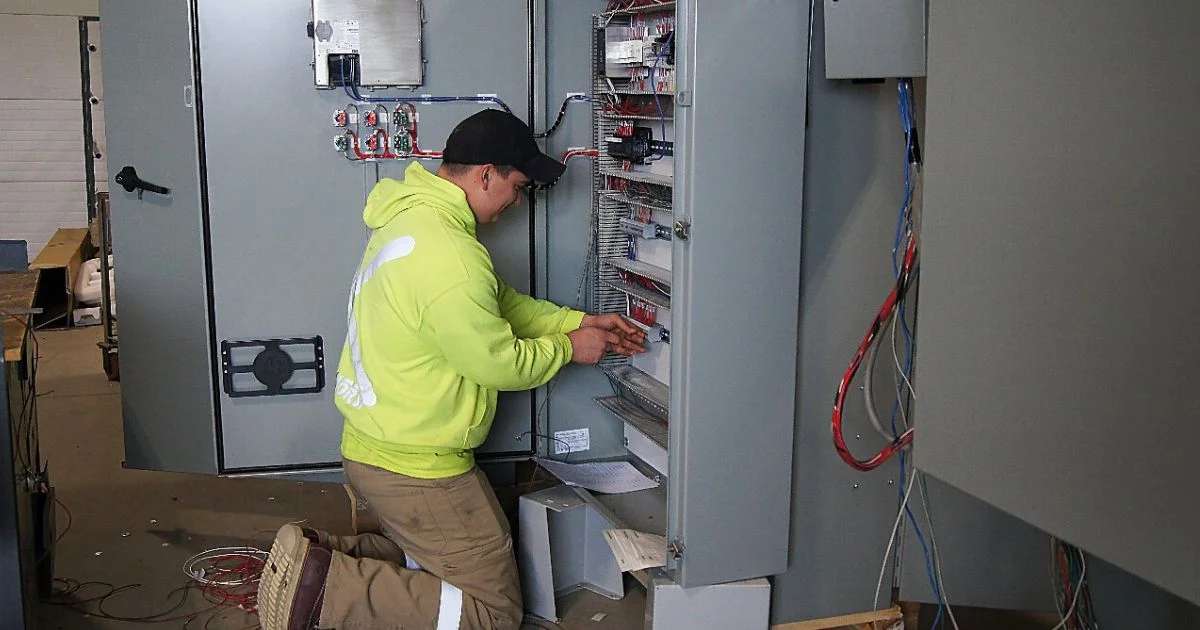
Electrical pre-apprentices learn to wire control panels, run conduit, install motor controls, and connect automation systems. Grain systems run on PLCs (programmable logic controllers) that manage everything from dryer temperatures to bin filling sequences. The work starts with basics—pulling wire, mounting components, following electrical schematics—then moves to more complex tasks as skills develop.
Electrical work requires understanding both the physical installation and the system's logic. It's not only about connecting wires, but designing control systems that need to function reliably in all conditions. That means learning to read schematics, understanding circuit logic, and knowing how different components interact.
Both paths involve travelling to jobsites across Ontario. Pre-apprentices don't stay in one location doing the same tasks repeatedly. The work involves reviewing different facility configurations, solving various challenges, and working with different equipment.
Some projects are completely new builds starting from excavation. Others are system upgrades on existing facilities where new equipment integrates with older infrastructure. Working with a single contractor who handles everything in-house lets you see how all the trades coordinate, not just one piece of it. Learning to adapt skills to different site conditions and equipment setups.
The Commitment We're Actually Making
Training pre-apprentices costs time and money. We do it because we need skilled tradespeople, and developing people ourselves works better than other options.
That means supporting development in practical ways.
When someone's struggling with something, crew leaders explain it differently. When apprenticeship classes need to be attended, we work around that schedule. When certification exams come up, we make sure the hands-on experience backs up what's been learned.
The apprenticeship process takes time. Both millwright and electrician certifications require thousands of hours of on-the-job training and classroom learning. That's not a short commitment, and we're clear about that upfront. But for people willing to put in the time and effort, we'll support the entire process.
Some people try this work and realize trades aren't for them. That happens. The work is physically demanding, the conditions aren't always comfortable, and the precision requirements don't appeal to everyone. But for people interested in learning a trade, ready to work, and committed to developing skills, we provide a real path to becoming a certified millwright or electrician.
What Happens After Certification
The career path continues past journeyperson. People can move into crew leadership roles, specialized technical positions, or other areas where skills matter. We promote from within when possible because people who've worked their way up through our system already understand how we operate and what we expect. You don’t come to Horst to coast, you come to climb. And you need nerve, grit, and focus to get the job done.
Both millwright and electrician are Red Seal trades, which means certification is recognized across Canada. Working in another province or relocating later in a career? The credentials transfer.
Crew leaders are often people who started as pre-apprentices or labourers, earned certifications, worked as journeypersons for several years, and then moved into leadership roles. That progression isn't guaranteed, but it's a path that's available for people who are interested and capable.
What We're Looking For
Previous experience or existing knowledge about grain systems or PLCs isn't required. Showing up on time, working safely, asking questions when something's unclear, and caring about doing the job properly—that's what matters.
We hire people fresh out of high school. We hire career-changers. We hire people who tried other apprenticeships that didn't work out. What matters is the willingness to learn and the ability to work well with a crew.
The work's demanding. Outside in all weather, climbing bins and towers, lifting heavy equipment, working long days during busy seasons. It's not a desk job. The conditions can be uncomfortable—hot in summer, cold in winter, sometimes working in rain or wind.
But for people who want to learn a skilled trade while earning a paycheque and working with people who take teaching seriously, this might be the right fit.
We're hiring pre-apprentices now for our Elmira and Winchester locations. Ready to start learning a trade while earning a paycheque? Contact us directly.