
 Horst
Systems
Horst
Systems
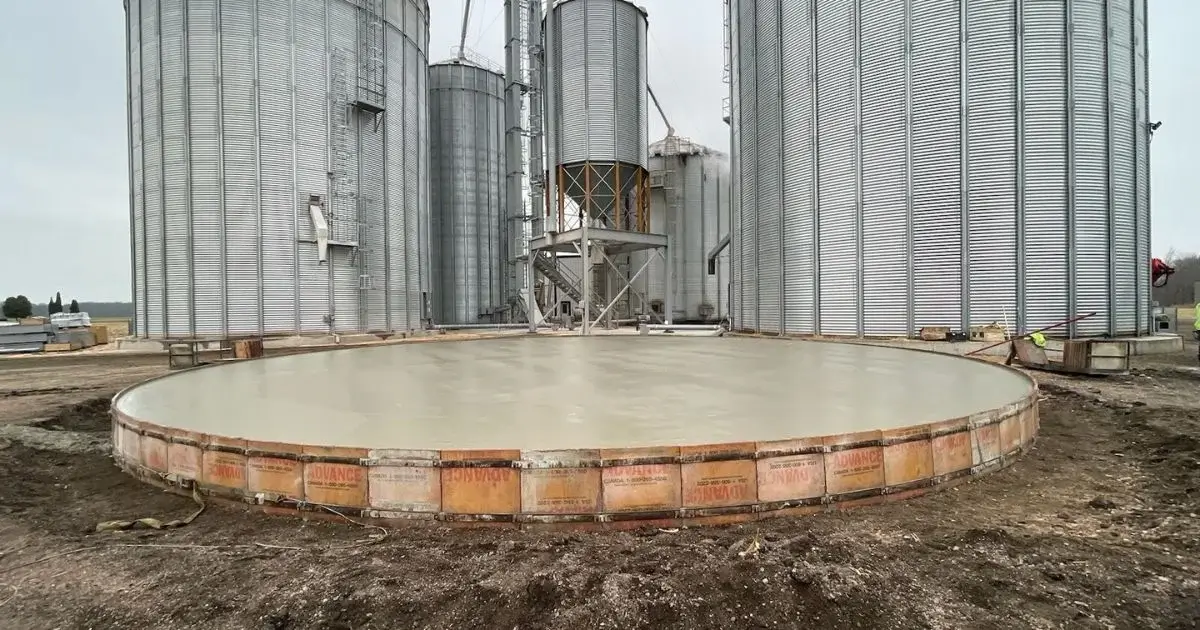
The bin you're installing weighs over 100,000 pounds when it's full of corn. Add the steel structure supporting bucket elevators and conveyor systems, and you're pressing massive loads down on footings that need to hold position for decades.
Grain system concrete foundations that settle even a couple inches under that load don't just crack. They pull the entire structure out of alignment. Legs shift, conveyors bind, bins develop stress points that weren't part of the design.
What starts as minor settlement in grain system concrete foundations turns into a maintenance problem that follows you through every harvest until you budget for corrective work. The difference between doing it right the first time and fixing it later shows up in the invoice and the downtime you can't afford.
Steel Doesn't Wait for Foundation Mistakes to Correct Themselves
When a bucket elevator leg shifts because the footing underneath settled unevenly, the alignment tolerances that keep grain moving smoothly just disappear. Bearings wear faster. Drive systems work harder. You're looking at downtime during the weeks that matter most.
Build on a foundation that holds its position under full load, through freeze-thaw cycles, across decades of Ontario weather. A proper foundation for your operation accounts for soil bearing capacity, frost depth, load distribution, and how the ground behaves over time. Miss any one of those and the risk shows up exactly when you can't afford it.
Load Distribution and What It Actually Protects
A bucket elevator leg transferring massive loads through a column needs a footing designed to spread that weight across enough surface area to prevent settlement. According to Rural Builder's technical guidance on grain bin foundation preparation, grain weight in a bin can push soil-bearing requirements far beyond what's standard for most construction.
Undersized footings settle. Oversized footings waste concrete and budget. Properly engineered footings just do their job for decades, which is what you're building for. When the team pouring your concrete is the same team installing the grain handling equipment, they already know the load paths, the anchor bolt layouts, and the tolerances that matter.
Ontario Soil Conditions Don't Follow a Template
Perth County clay doesn't behave like Huron County sand. A foundation designed for one won't perform the same in the other, and soil testing before design tells you what footing size, depth, and reinforcement you need.
Ignoring local soil conditions to save a few thousand dollars during planning leads to expensive rework when frost heave shifts a footing during the first winter. That early savings looks different when you're paying it back tenfold during harvest downtime, and the concrete you're pouring today is the infrastructure protecting harvest ROI decades from now.
Frost Depth Matters More Than Most Operations Think
Ontario frost penetration reaches several feet deep in most regions. Research from the National Research Council of Canada correlates freezing index data to frost depth right across the country. Footings above the frost line move during freeze-thaw cycles. Footings below it stay put, and there's no middle ground worth considering.
A footing that shifts seasonally doesn't just settle. It fatigues the connection points between the foundation and the structure sitting on top. Connections loosen, bolts crack, and you've got a system with play in it that affects alignment and performance every time you run it. Grain system concrete foundations designed below the frost line avoid that cycle entirely.
Full-Service Grain System Contractors Eliminate Coordination Gaps
When the concrete team, millwright crew, and electrical team all answer to the same project manager, accountability doesn't vanish into coordination gaps. Foundation dimensions match the anchor bolt layout. Elevations match the leg base plates. Conduit sleeves end up where the electrical plan says they should be, and nobody's back on-site weeks later with a core drill and change orders.
Split the work between contractors, and those coordination points become failure points. The concrete contractor pours according to one set of drawings. The steel erector shows up with anchor bolts that don't match the embeds.
A full-service grain system contractor eliminates that friction because the team designing the system specifies the foundation requirements, the crew pouring the concrete knows the steel erection sequence, and the millwrights installing the legs are working with footings designed for the equipment they're mounting.
That's institutional memory at work. The system we build together has continuity from concrete to commissioning, and 35 years of Ontario builds means the crews arriving on your site have seen these decisions play out. They know which ones hold and which ones create problems several harvests in when you're running the system hard during a wet October and the ground's soft and the bins are filling faster than you planned.
Anchor Bolt Placement Can't Be Close Enough
A bucket elevator leg base plate has anchor bolt holes positioned to specific tolerances. The bolts embedded in the concrete need to match those tolerances tightly, and if you miss that, the base plate doesn't fit without modifications that compromise either strength or alignment.
You need coordination between the structural design, the concrete forming, and the steel erection to hit that level of precision. Templates make sure anchor bolts are positioned right before the pour. Surveys confirm elevations match the design.
Reinforcement Standards Protect the Investment You're Making
Concrete handles compression. Steel reinforcement handles tension, and together they create a foundation that can carry the loads and stresses integrated grain systems generate over decades. Undersized rebar or rebar that's not positioned right weakens the footing's ability to distribute loads and resist cracking.
Reinforcement schedules are part of the engineered design. The concrete contractor follows those schedules, and inspections confirm the rebar's where it should be before concrete placement. Cut corners on reinforcement to save a few hours or a few hundred dollars and you're creating risk that shows up later when a footing cracks under load and you're looking at repair work that shuts down part of the system.
Curing Controls What the Foundation Can Handle
Concrete gains most of its design strength in the first month. Proper curing during that window makes sure the foundation develops the compressive strength it was designed for, and if you rush the curing or don't control moisture retention, you're reducing strength while increasing the chance of surface cracking.
Temperature matters. Pour concrete in freezing conditions without proper protection, and you're compromising strength development. Pour in hot, dry conditions without controlling moisture, and you get rapid surface drying that causes shrinkage cracks. The crew pouring your foundation brings the experience and equipment to protect the concrete during curing, no matter what Ontario weather throws at it.
Grain System Electrical and Controls Start at the Foundation
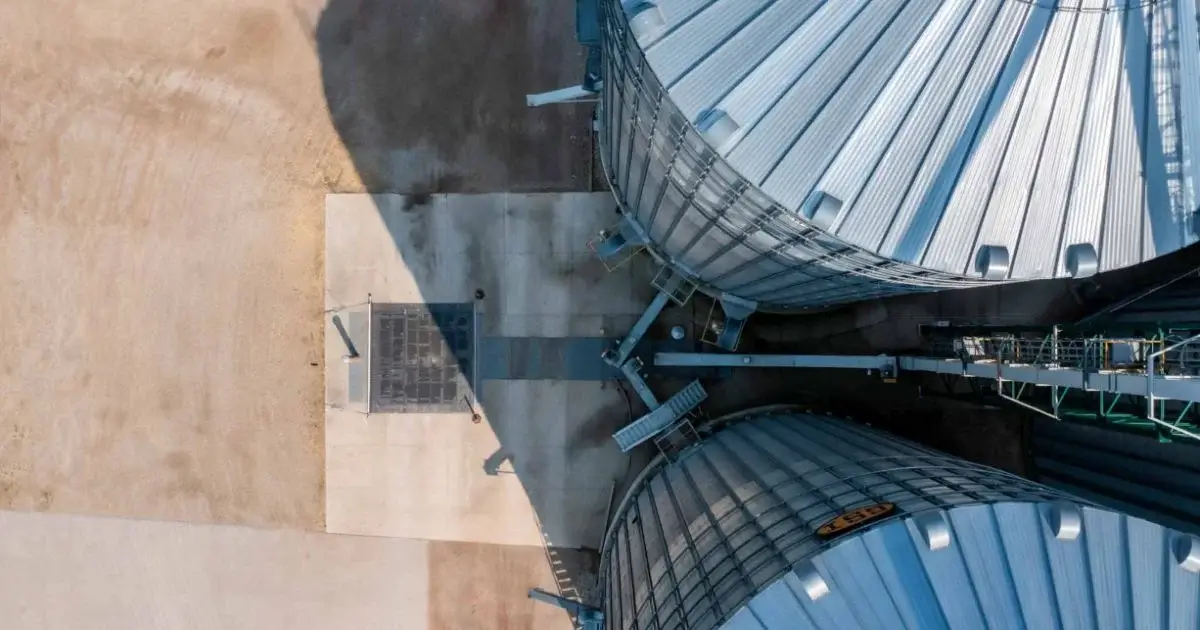
The foundation you're pouring today supports more than steel and grain. It's the infrastructure that carries conduit for electrical systems and controls, the pathways for automation sensors, and the anchor points for monitoring equipment you'll add as your operation scales. Size the foundation and plan the conduits for what you're building toward, not just what you need today.
A conduit sleeve cast into the footing during the pour costs next to nothing. Adding that same pathway after the concrete cures means core drilling around rebar you can't see and hoping the route works. Crews that take an installation from concrete to controls plan those pathways before the forms go up, because they know what's getting mounted on that foundation two phases later.
The same goes for the control panel pad and the trenching runs out to remote bins. A PLC panel needs conduit feeding it from every motor it manages. Lay that out during foundation design and the electrical rough-in goes quickly. Skip it and the electricians end up surface-running conduit across finished concrete. It works, but it's exposed to equipment traffic, and it tells anyone who walks the site that the build was pieced together.
For a tech-forward operation, that planning is what turns a bin yard into a network. Every monitoring cable you add as the operation scales rides on a pathway someone either planned during the pour or fought for afterward.
The Foundation Decision Protects What You've Built
A grain system is a multi-decade investment, and the foundation supporting it needs to perform reliably for the entire operational life. Through freeze-thaw cycles. Through full-load conditions. Through the expansion projects that happen years after the initial build when you're adding capacity or modernizing controls.
Getting the foundation right the first-time costs less than fixing it later. The difference between a properly engineered foundation and one that settles under load is the difference between a system that runs reliably and one that generates maintenance costs every season.
The foundation you spec today is the premium paid to protect operational resilience in 2030. For commercial operations and family farms building new systems or expanding capacity, grain system concrete foundations are profit insurance.
We design and build grain systems with the foundation work integrated into the project from the start. The team specifying the footings is the same team installing the grain handling equipment, which means the foundation gets engineered for the loads it'll carry.
Reach out to discuss your project and the foundation requirements that protect your investment.